
- Line bottom of trap with newspaper. This keeps paws from slipping through, and makes it feel more natural for them to walk on.
- Place trap on level ground, out of direct sun and/or rain. If it is cold outside, put a towel underneath the trap to protect cat from the cold ground.
- Use canned cat food or tuna (the smellier the better). Put food towards the back of the trap (past trigger plate). You can also put a small piece at the entrance of the trap to encourage them to go in.
- Make sure all other food is picked up (the cat needs a reason to go in the trap!)
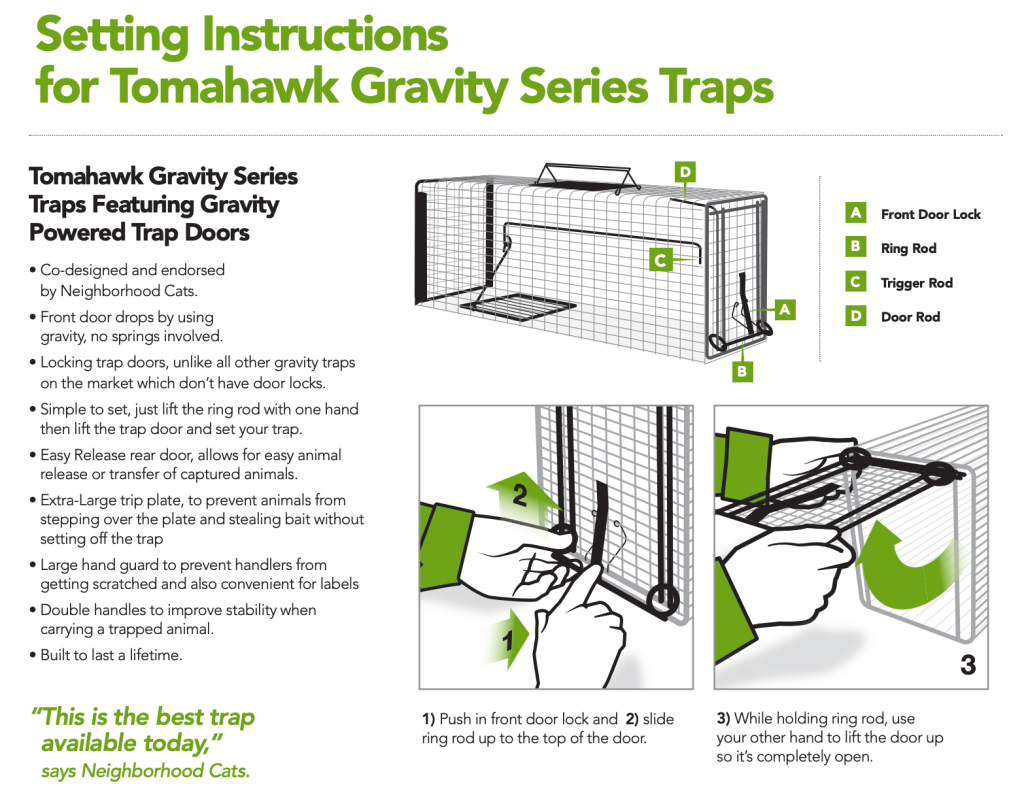
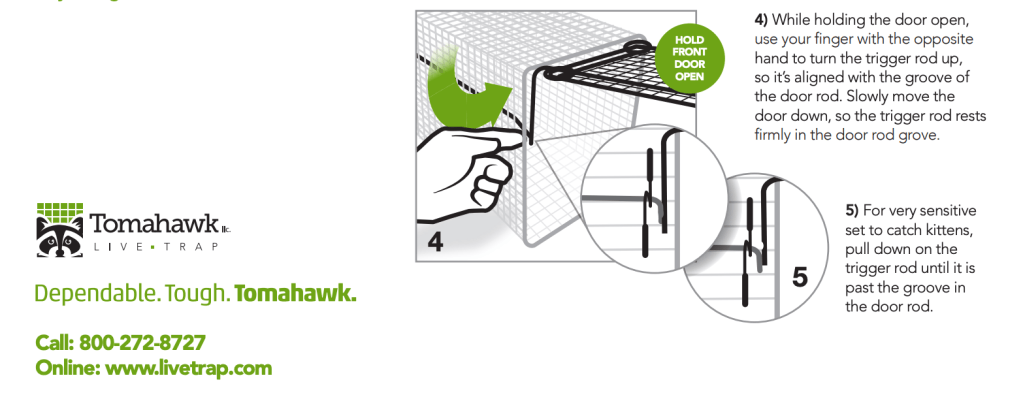
- Set the trap (see images below).
- Cover trap with the included cover. This helps keep the cats calmer while they are in the trap.
Surgery & Post-Surgery Care
- Once trapped, arrange pickup/dropoff:
a) contact your local animal control if you have already discussed pickup with them
b) or take to your local vet if you have scheduled an appointment
c) or take to Animal Allies during their designated drop-off times (confirm first) - After surgery, leave the cat in the trap (covered) overnight. Place in a safe, temperature-controlled area, to allow time for anesthesia to completely wear off. For spay abort females, you may want to hang onto them an extra day to be safe. Note: keeping a feral cat trapped longer than is necessary can be stressful on them.
- Make sure cat is fully conscious & alert, and that eyes are clear, before releasing. Note: it is normal for a cat to not show up for a day or two afterwards.
IMPORTANT: Check trap often. Do not leave unattended for long periods of time and/or in unsafe areas.
 Cat Trap Depot